
How the World Bank and IMF, created after the Second World War, uphold dollar dominance. Supporters of these organisations point to the economic support they provide – critics call them tools of neocolonialism.
Caleb Hinton

How the World Bank and IMF, created after the Second World War, uphold dollar dominance. Supporters of these organisations point to the economic support they provide – critics call them tools of neocolonialism.
Caleb Hinton
26 min read
26 min read

Global control is as much about financial dominance as it is military dominance.
Since the end of the Second World War, the USA has been secretly creating a system of reliance on the US dollar, which experts call 'dollar dominance'. Dollar dominance intends to create an engineered reliance on the US dollar, so world economies have a permanent interest in the US economy.
According to the Dollar Dominance Monitor, in 2026, the US dollar accounts for 89% of foreign exchange transactions, 54% of export invoicing (global trade), and 57% of global central bank reserves. The US maintains this with an advanced system of financial products, foreign policy, and military intervention.
This has not happened by coincidence. An economic imperialist plan has been underway since 1945, consisting of military interventions, loans, and shady deals. Beginning with The Marshall Plan, the US has quietly infiltrated all world economies, so that in the modern world, the US dollar is the final unit of account.
Here is how the US maintains this system.
The World Bank and International Monetary Fund (IMF) are American institutions that were created in 1945 towards the conclusion of the Second World War and began lending in 1946 and 1947.
The core function of both organisations is to offer loans to countries in trouble and work to maintain economic stability in unstable regions. Both make decisions on how the economy operates, which countries receive more money, and who is in charge of these economies.
The definition of each:
The IMF, as per its website, states that it “works to achieve sustainable growth and prosperity for all of its 191 member countries.
The World Bank Group states that it is “a unique global partnership fighting poverty worldwide through sustainable solutions.”
Although the World Bank and the IMF are separate organisations, they are often spoken about as one entity, as they were created at the same time, and often work collaboratively.
On the surface, the organisations seem the same, and even economic experts sometimes have trouble distinguishing them. Keynes admitted himself that he was confused when it came to distinguishing the two, stating that he “thought the Fund should be called a bank, and the Bank should be called a fund.”
Although both organisations have a charitable tone, critics dispute the intention. Both organisations receive flak for operating as tools for neocolonialism and maintaining global apartheid, as they allow the US to impose economic obligations on smaller countries – thus maintaining dollar dominance. Even in cases where there is a benefit, the incentive is to tie the country to the US dollar, always benefiting the US.
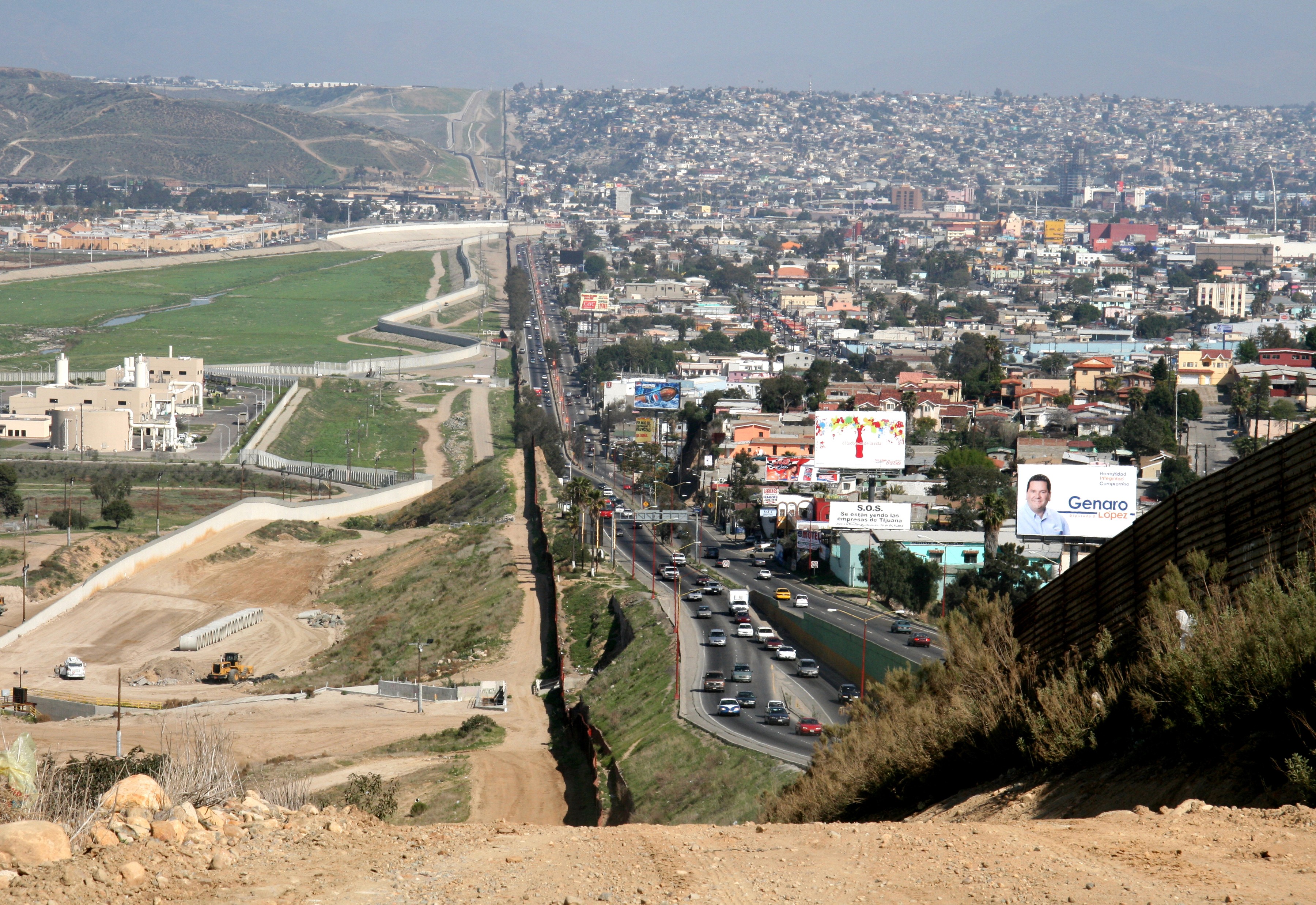
San Diego / Tijuana border (1)
The World Bank brands itself as a "development institution" which serves to "promote social progress in developing countries by helping to raise productivity so that their people may live a better and fuller life".
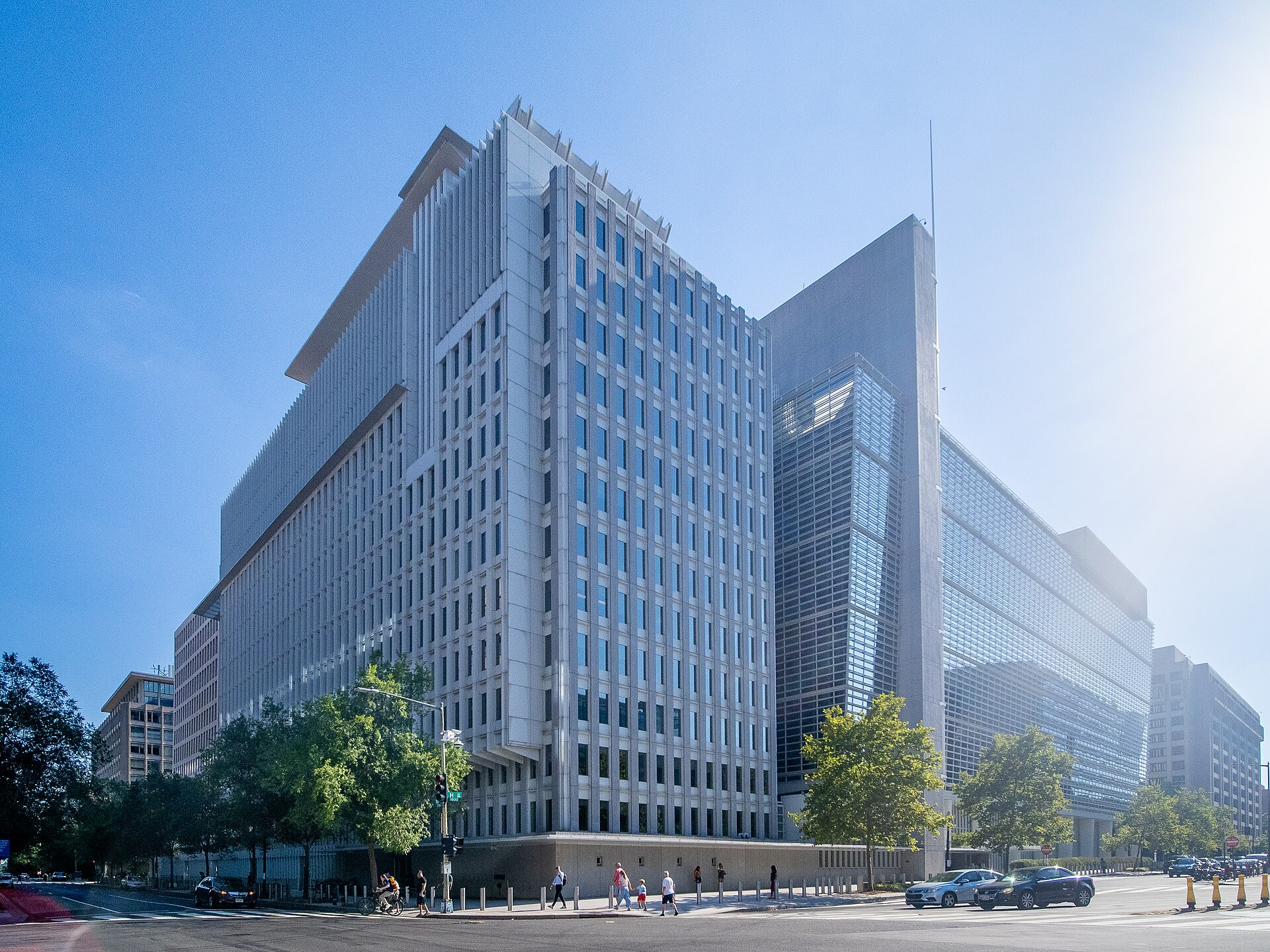
With 189 member countries, the World Bank Group is a “unique global partnership fighting poverty worldwide through sustainable solutions."
The World Bank (officially called the World Bank Group) is actually an umbrella for five international organisations, all operating in similar industries.
These organisations are:
Bank for Reconstruction and Development (IBRD), established in 1944 (main lending arm)
International Development Association (IDA), established in 1960 (concessional loans and grants)
International Finance Corporation (IFC), 1956 (investment, advisory, and asset-management services)
International Centre for Settlement of Investment Disputes (ICSID), 1965 (legal dispute resolution and conciliation between international investors and States)
Multilateral Investment Guarantee Agency (MIGA), 1988 (political risk insurance and credit enhancement guarantees)
As of 2026, the IRBD is owed approximately $280 billion. As of December 31, 2025, IDA had approximately $231 billion of loans outstanding (net loans outstanding were $226.4 billion as of December 31, 2025 – the difference reflects gross vs. net of loan loss provisions).
The countries that owe the most to the World Bank (IDA):
Bangladesh – $23 billion
Pakistan – $19.4 billion
Nigeria – $18.7 billion
Ethiopia – $14.1 billion
Tanzania – $14.1 billion
Kenya – $13.2 billion
India – $13 billion
In total, approximately $511–516 billion is owed across various arms of the World Bank Group.
The International Monetary Fund (IMF) brands itself as a "co-operative institution that seeks to maintain an orderly system of payments and receipts between nations".
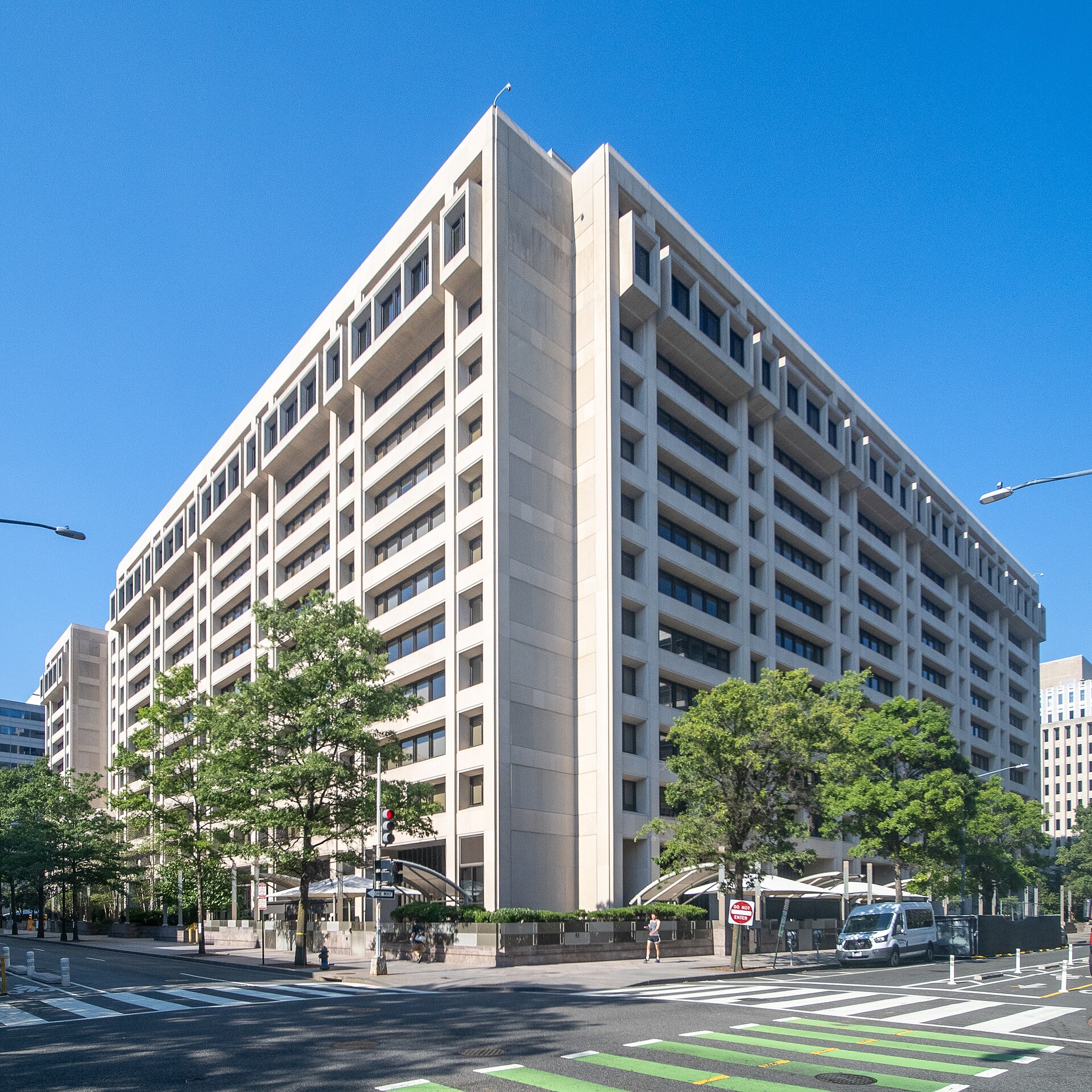
Its purpose is to maintain economic stability in the world and “administer a pool of money from which members can borrow when they are in trouble”.
You can find all the records of how much is owed to the IMF on the IMF's official website. As of 2026, the IMF is owed approximately $165 billion, with Argentina, Egypt, Ukraine and Pakistan making up the largest portion of this.
The World Bank and IMF are closely related, and are even across the road from each other, both a stone’s throw from the White House.
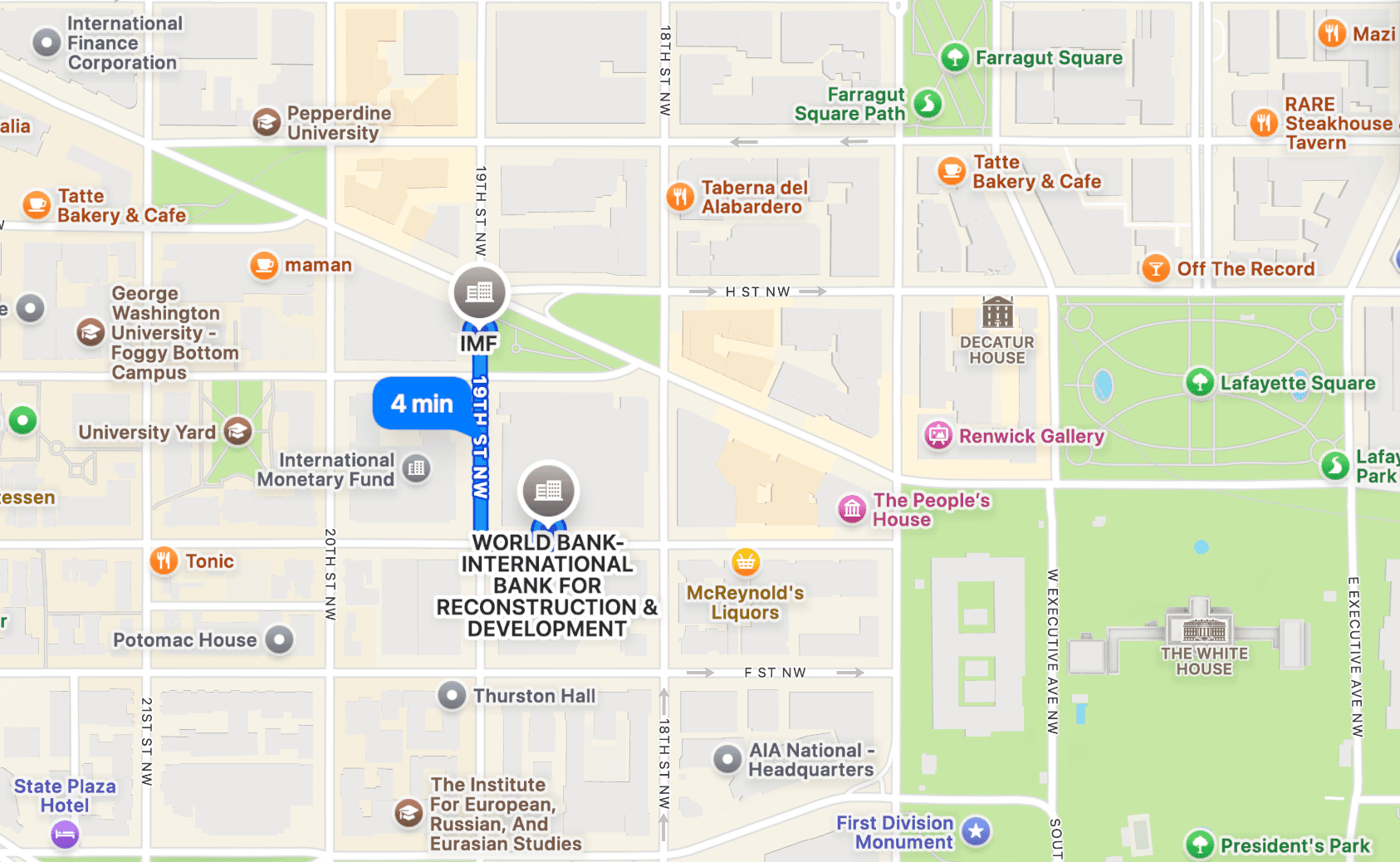
As mentioned earlier, the organisations often operate together, and even experts have trouble distinguishing them. The two organisations frequently collaborate on projects, which is in line with a 1989 agreement.
A statement from the World Bank outlines the difference between the World Bank and the IMF:
The World Bank and the International Monetary Fund (IMF) were founded at the same time, and their headquarters are across the street from one another in Washington, DC.
But while the work of the Bank and the Fund is complementary, their individual roles are quite different.
The World Bank is a lending institution whose aim is to promote long-term economic growth that reduces poverty in developing countries.
The IMF acts as a monitor of the world's currencies by helping to maintain an orderly system of payments between all countries, and lends money to those of its members who face serious balance of payments deficits.
The main ways the two organisations work together are through meetings and collaborations on certain projects. Although the two organisations are separate, they have a unified agenda and often go hand-in-hand.
The World Bank and IMF hold annual meetings of the Boards of Governors of the IMF and the World Bank, where they discuss affairs in both remits. The Development Committee is also attended by members of both organisations.
In private, the managing director of the IMF and the President of the World Bank meet regularly to consult on major issues, and will issue joint statements, articles, and conduct country visits together. Other internal meetings between the two organisations are common.
Aside from meetings, the IMF and the World Bank collaborate on policy, reforms, and general advice. The World Bank will base a large amount of its assessments and policies on data from the IMF, and conversely, the IMF will heed advice on structural and sectoral reforms.
Other initiatives and programs the two organisations collaborate on include:
The Heavily Indebted Poor Countries (HIPC) Initiative
The Financial Sector Assessment Program (FSAP)
The Multilateral Debt Relief Initiative (MDRI)
The Debt Sustainability Framework (DSF)
Joining the UN's 2030 Global Development Agenda in 2015, both organisations work together to support member countries in reaching the Sustainable Development Goals (SDGs), which aim to promote five elements of "people, planet, peace, prosperity, and partnership".
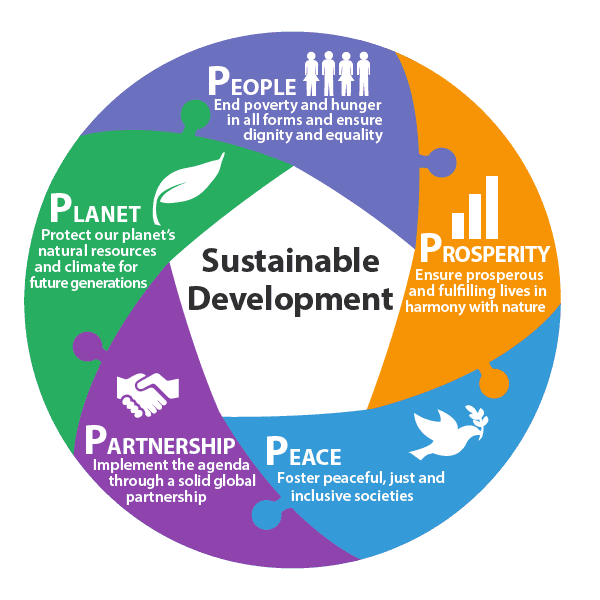
As much as the two organisations seem like deeply institutional monetary organisations carved from the stone of Mount Rushmore, they are far younger than they seem, much like other behemoths such as BlackRock.
Both the World Bank and the IMF are less than 100 years old and were created after the Second World War, forged alongside the Bretton Woods System, yet have already become a bedrock of the global economy.
Before the Second World War, many major world economies relied on the gold standard to stabilise their currencies. But after the widespread physical and economic destruction of the war, most economies were in ruins and were scrambling to rebuild.
As with any race to rebuild, a growing paranoia and suspicion began to arise. There was a growing worry that countries becoming isolationist in trying to fix their economies would make things even worse, implementing what are known as ‘beggar thy neighbour’ policies – essentially, making things worse for others in order to get ahead.
The US stepped up in 1944 after decades of handing out debts to Europe and proposed a new system to restore economic stability. This system would mean all participating currencies would be fixed to the price of the US dollar, and the US dollar would be fixed to the price of gold. Essentially, implementing a gold standard by proxy.
This system came to be known as the Bretton Woods system, and 44 allied nations agreed to be part of it.
Australia
Belgium
Bolivia
Brazil
Canada
Chile
China
Colombia
Costa Rica
Cuba
Czechoslovakia
Dominican Republic
Ecuador
Egypt
El Salvador
Ethiopia
France
Greece
Guatemala
Haiti
Honduras
Iceland
India
Iran
Iraq
Lebanon
Luxembourg
Mexico
Netherlands
New Zealand
Nicaragua
Norway
Panama
Paraguay
Peru
Philippines
Poland
South Africa
Syria
Turkey
United Kingdom
United States
Uruguay
Yugoslavia
It is important to remember that the US also controlled two-thirds of the world’s gold at the time, so the rest of the world had little choice, lest they risk branching out on their own and attempting to fix things on their own. The World Bank and IMF were created to help monitor and maintain this system. Naturally, Soviet representatives backed out, citing the institutions to be simply "branches of Wall Street".
In a macro view of history, the Bretton Woods agreement was a flash in the pan and lasted less than 30 years. On August 15th, 1971, President Nixon brought a swift end to the agreement due to fears that pressure on the US gold reserves was undermining the dollar. In short, foreign countries such as France were buying more gold than the US could keep a handle on, so they pulled the plug on the entire system.
This whiplash change is referred to as Nixon Shock. The end of the system meant that the US dollar became free-floating; it was attached to nothing and relied purely on the trust in the currency, becoming 'fiat' currency. As a result, the 44 allied nations were also cut from this deal and also became free-floating overnight. Some remained free-floating, but weaker currencies either suffered economic turmoil or had to form a brand new deal with the US.
By the end of the 1970s, the dominance of America’s currency had been well established, and it set in motion the true roots of dollar dominance.
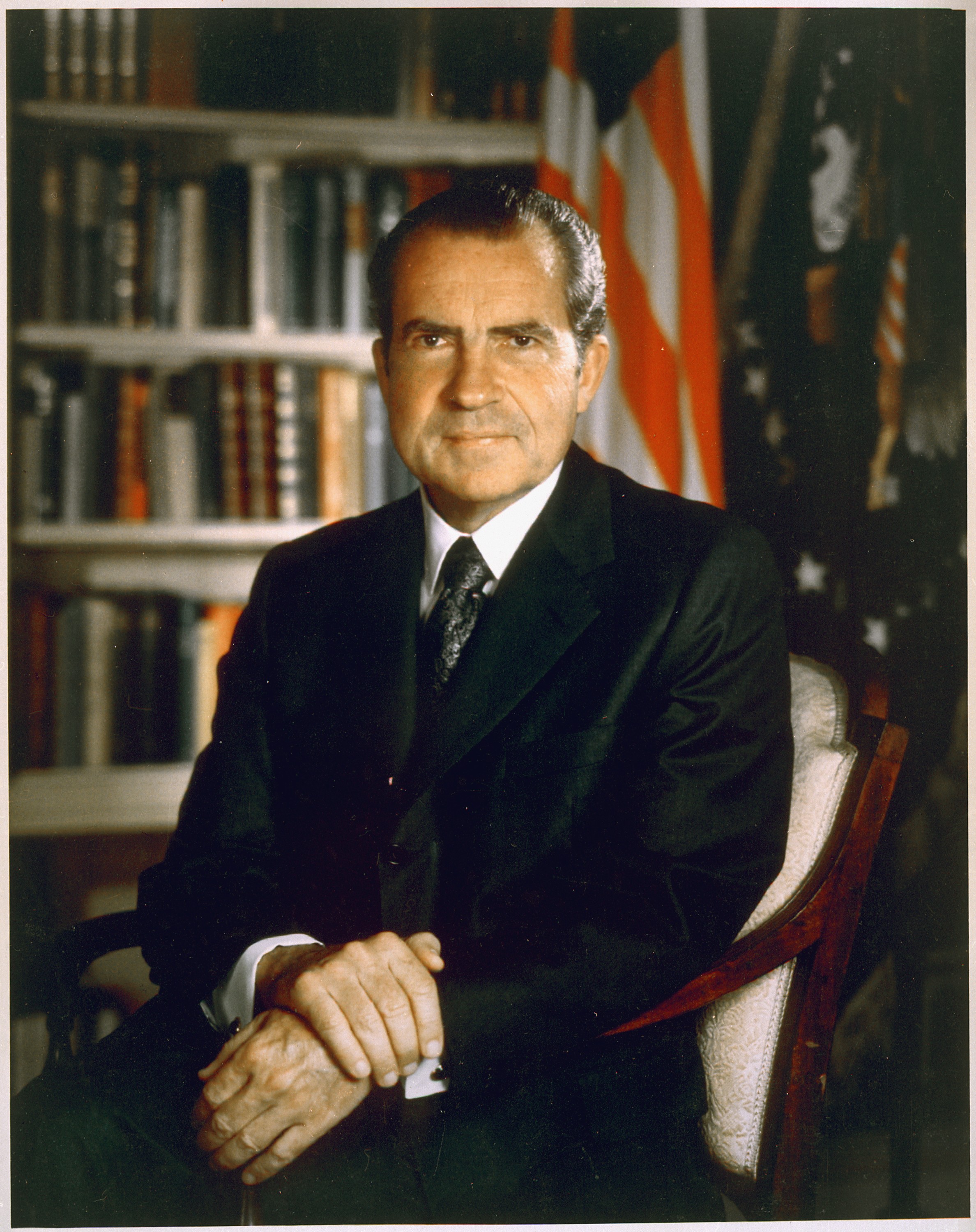
Nixon bringing the Bretton Woods Agreement to an end set in motion the true power of dollar dominance.
In short, all countries using and relying on the US dollar is a huge benefit to the US. Today, 65 currencies are directly pegged to the US dollar, and 11 countries use the US dollar as their official currency.
This widespread use of the dollar gives the US unmatched control over the world economy, and the World Bank and IMF are the organisations used to maintain dollar dominance. They maintain the necessity of dollars via loans and ensure that the money is always flowing back into the US.
There is literally nowhere to hide from the dollar, and every country must participate in it.
The World Bank ‘represents’ 188 countries with its loans and programs. All countries get a vote in major decisions in these countries, such as who is in charge of the banks, as well as the senior management.
There are separate organisations within the World Bank, and each country is allocated different voting powers and decisions within each arm of the organisation – the World Bank explains its specific process.
The organisations are:
International Bank for Reconstruction and Development (IBRD)
International Finance Corporation (IFC)
International Development Association (IDA)
Multilateral Investment Guarantee Agency (MIGA)
Within each of these, the 188 countries are given a percentage of the voting power in each.
However, not all votes are created equal. Voting power is based on contributions, so the more money you put into the World Bank, the more voting power you get.
The United States holds the largest share of voting power in every category.
IBRD – (US vote, 15.75%)
IFC – (US vote power, 18.31%)
IDA – (US vote power, 9.70%)
MIGA – (US vote power, 14.98%)
You can see all the voting powers on the World Bank’s website.
Japan, China, Germany, the UK, and France clean up the rest of the votes – the rest of the 188 countries have a tiny cut of the vote, the majority not even 1%.
So while the World Bank represents these countries and allows them voting power in decisions on their own economies, the voting power they are given is negligible.
Naturally, the decisions made, such as choosing leadership and which countries to support and how much, will always be skewed towards American interests and those that pay the most. This is how the US can (and does) control the world economy to its advantage.
Exercising caution in dealings with the IMF – The Reporter Ethiopia
https://www.thereporterethiopia.com/32755/
David Graeber, in Debt: The First 5,000 Years, refers to a section of Danish explorer Peter Freuchen's Book of the Eskimo, where he offends a hunter by thanking him for a gift:
Freuchen tells how one day, after coming home hungry from an unsuccessful walrus-hunting expedition, he found one of the successful hunters dropping off several hundred pounds of meat. He thanked him profusely. The man objected indignantly: "Up in our country we are human!" said the hunter. "And since we are human we help each other. We don't like to hear anybody say thanks for that. What I get today you may get tomorrow. Up here we say that by gifts one makes slaves and by whips one makes dogs."
The basis of neocolonialism is to restore the same level of colonial power but through indirect means – to hold a clean image and the appearance of a good relationship with the same level of control.
It is difficult to crack through the positive veneer of the organisations that lend billions to countries in need, and arguably, both organisations have likely contributed some good through their debt giving.
But despite what the World Bank and IMF claim, global apartheid is unchanged, and income inequality is rising. Both organisations continue to lend billions, and poorer countries continue to rack up debt. Jeffrey Sachs cited that for the IMF, the "usual prescription is 'budgetary belt tightening to countries who are much too poor to own belts'"
IMF surcharges are estimated to increase borrowing costs on average by 64.1%, punishing the economies already in economic turmoil. Furthermore, IMF loans cannot be rescheduled or renegotiated. As always, the poorest in each of these poorer nations will be the ones really paying for these debts.
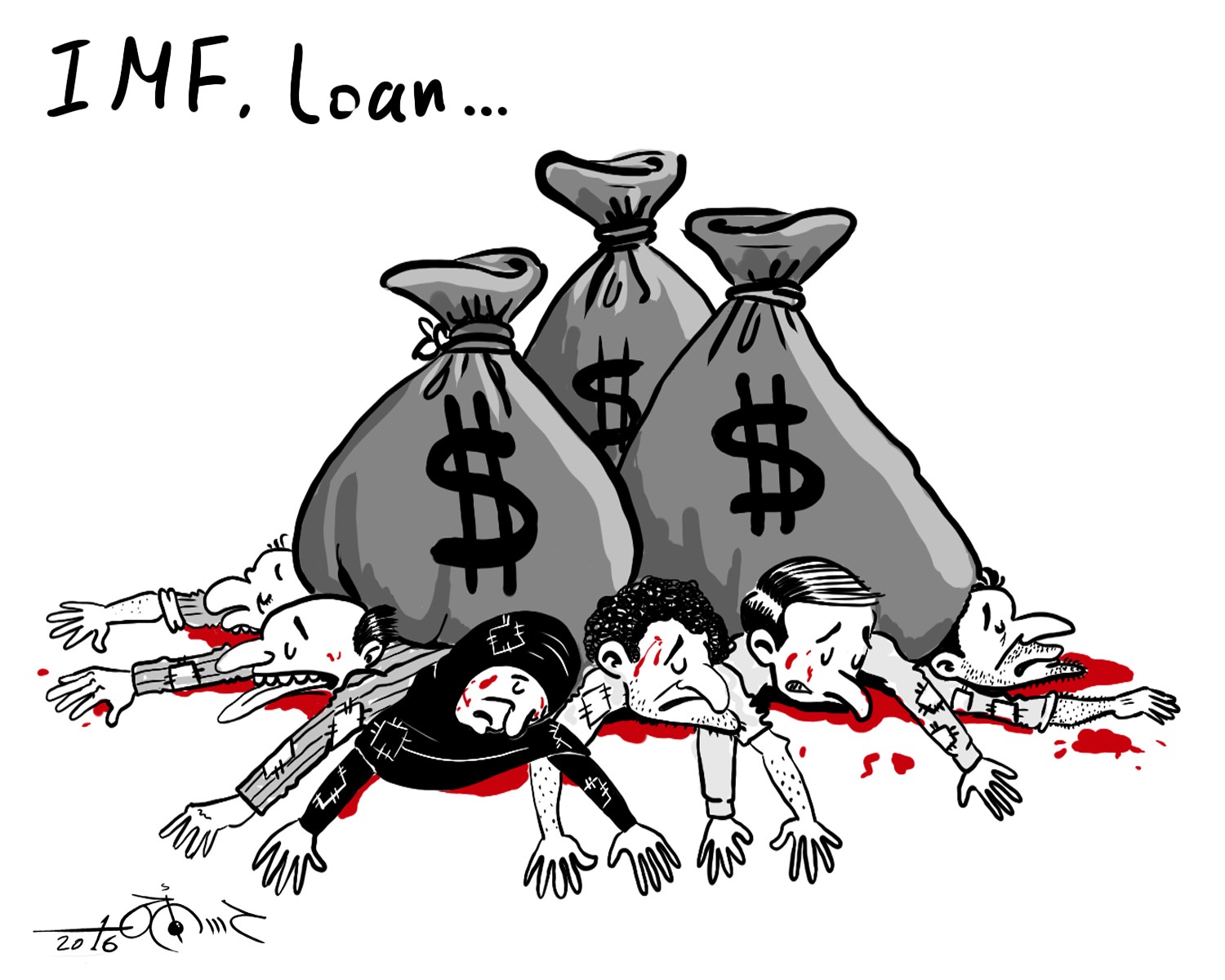
"Egypt's poor will suffer the burden of the IMF's loan conditions" – DailyNewsEgypt
As a business, these organisations thrive on countries that are economically distressed. Does the US have an incentive for countries to be in turmoil?
The World Bank and IMF are always waiting and always ready to help out.
Progress

0%
Progress
0%
Finnus LTD.
Company Registration Number (CRN): 15704119
All rights reserved
2026